
Upflow → Blog → SaaS Finance
SaaS Finance: The Complete Guide to Managing Cash in a Subscription Business
Alexandre Antoine
|
August 6, 2026
Generate AI summary


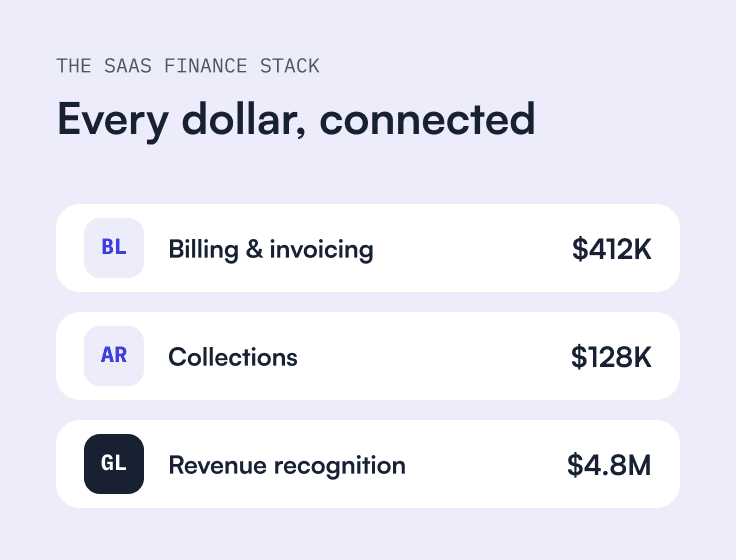
SaaS finance covers the financial operations of a subscription software business: billing, revenue recognition, cash collection, reporting. The reason it gets treated as its own discipline rather than a subset of general B2B finance comes down to the subscription model itself. Customers pay recurring fees instead of one-time purchases, which means money collected today often pays for service delivered over the next twelve months. Contracts change mid-cycle. Cash flow depends on retention almost as much as new sales.
This guide walks through what makes SaaS finance different, the metrics worth tracking, how to think about your finance tech stack, and where most finance teams run into trouble as they scale.
How SaaS Finance Differs From Other Businesses
Traditional B2B finance deals with discrete transactions. A good or service gets delivered, an invoice goes out, payment comes in, and the relationship resets. SaaS doesn’t reset the same way. A few structural differences explain why:
Revenue is recurring rather than one-off. A customer might sign a 12-month contract, but the value gets delivered and re-earned every month. Finance has to track that obligation long after the deal closes.
Volume runs high while margins per transaction stay thin. A SaaS company might invoice thousands of accounts for a fraction of what a traditional enterprise vendor bills a handful of customers. Manual processes that hold up at 50 customers fall apart at 500.
Pricing rarely stays static. Tiered plans, usage-based add-ons, seat expansions, discounts, and mid-contract upgrades and downgrades are all standard, which makes invoicing and reporting harder than flat-fee billing ever was.
Deferred revenue sticks around. Customers often pay upfront for annual contracts or prepaid usage, so SaaS finance teams recognize revenue on a schedule tied to delivery, not on the date cash lands.
Churn carries real financial weight. Losing a subscription customer takes a slice of recurring revenue with it, and that’s part of why finance and customer success end up more entangled in SaaS than in most business models.
The result is a more complex, higher-volume, constantly shifting set of numbers. Most of SaaS finance work is really about building processes and systems that scale without needing a new hire every time volume grows.
The SaaS Financial Metrics Worth Tracking
SaaS has its own vocabulary of metrics, and a standard P&L doesn’t capture most of it.
Revenue metrics
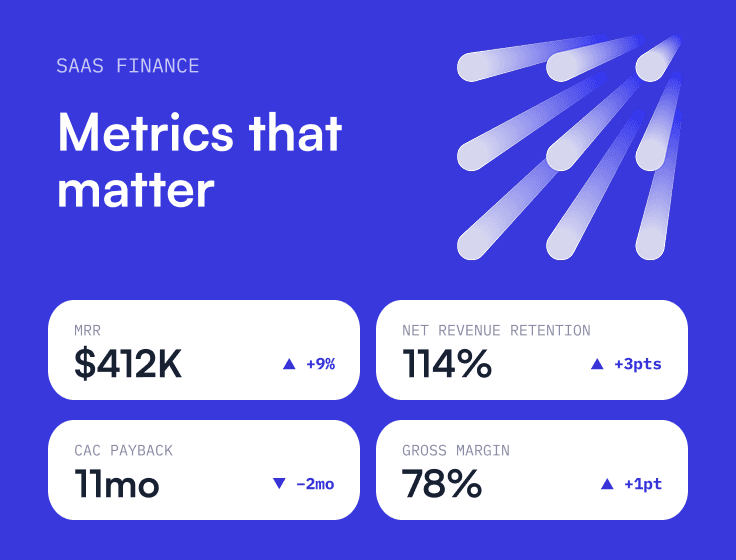
MRR (Monthly Recurring Revenue) is the predictable revenue coming in every month from active subscriptions, and it’s the number most SaaS teams check first. It grows through new customers, upsells, and expansions, and shrinks through downgrades and churn. Because it’s normalized to a monthly cadence, MRR is what lets you compare growth month over month regardless of contract length.
ARR (Annual Recurring Revenue) is MRR annualized, MRR times 12. Most SaaS companies report ARR to investors and boards since it makes year-over-year comparisons cleaner.
Booked MRR/ARR versus Contracted MRR/ARR is worth tracking as two separate lines. Booked reflects deals signed; contracted reflects what’s actually active and billing. A widening gap between the two often points to an onboarding or implementation bottleneck.
Net Revenue Retention (NRR) measures how your existing customer base’s revenue changes over a period, counting upgrades, downgrades, and churn, but excluding new customer revenue. NRR above 100% means the existing base is growing before you’ve closed a single new deal, one of the stronger signals of a healthy SaaS business.
Cost and efficiency metrics
CAC (Customer Acquisition Cost) is total sales and marketing spend divided by new customers acquired in a period. If CAC runs higher than Customer Lifetime Value, you’re losing money on every new customer regardless of how good top-line growth looks.
LTV:CAC ratio compares what a customer is worth over their lifetime against what it cost to acquire them. A healthy SaaS business usually targets at least 3:1.
Rule of 40 adds your growth rate and profit margin together. The combined figure should land at or above 40% for a SaaS business to be considered efficiently balancing growth and profitability.
Cash and collections metrics
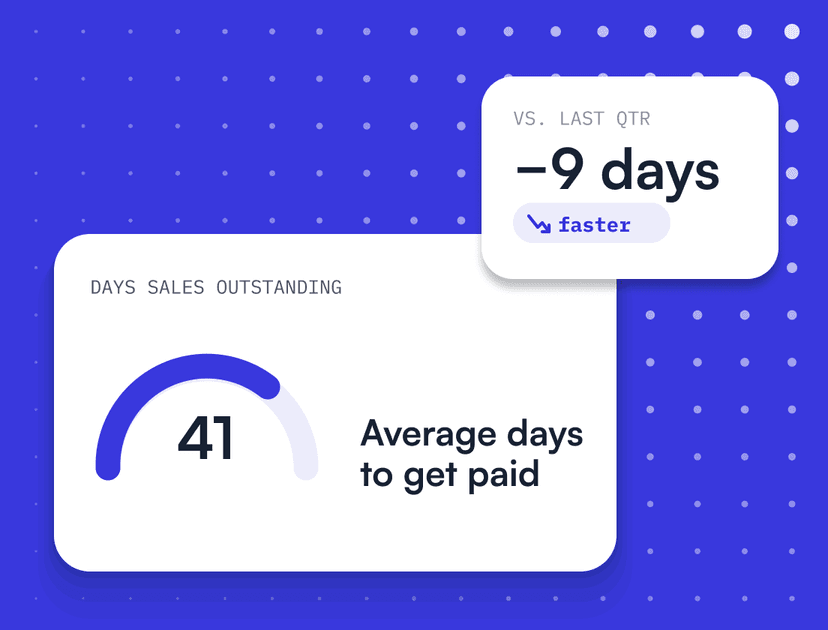
DSO (Days Sales Outstanding) is the average number of days it takes to collect payment after invoicing. A rising DSO is often the first sign collections haven’t kept pace with customer growth.
CEI (Collection Effectiveness Index) measures how much of the receivables that were collectible in a period actually got collected, which is a more nuanced read than DSO on its own.
Cash runway, how many months your current reserves last at your current burn rate, matters more in SaaS than in most business models because deferred revenue can make a balance sheet look healthier than the real cash position actually is. Cash runway and disciplined cash flow forecasting are what keep a subscription business from being blindsided by its own numbers.
Revenue Recognition and Deferred Revenue
This is where SaaS accounting departs most from a standard product business, and it’s governed by a specific standard: ASC 606, the five-step model that dictates when and how subscription revenue can be recognized on the income statement.
A customer who pays $12,000 upfront for an annual plan hasn’t earned you $12,000 of revenue the day the payment lands. That cash sits as a liability, deferred revenue, until the service is actually delivered, then gets recognized in monthly increments as the contract plays out. Get this wrong and you either overstate revenue, which creates a compliance and investor-trust problem, or understate it, which makes the business look weaker than it is.
Deferred revenue also functions as a leading indicator of near-term cash flow, since it represents money already collected for future service. Teams that track deferred revenue closely get a clearer picture of what’s actually available to spend versus what’s held for future obligations. For the mechanics in more detail, see our guides on SaaS revenue recognition under ASC 606 and the value of deferred revenue for long-term growth.
Building a SaaS Finance Tech Stack
A SaaS finance stack generally needs to cover four jobs, usually split across separate but integrated tools.
Accounting software is the system of record for your books, financial statements, and compliance reporting. NetSuite and Sage Intacct tend to serve scaling B2B SaaS companies well because of their multi-entity and revenue recognition handling. QuickBooks and Xero suit earlier-stage teams fine until the complexity outgrows them.
Billing and subscription management handles pricing logic, invoicing cadence, upgrades and downgrades, and usage-based charges. Tools like Chargebee, Zuora, and Stripe Billing exist because subscription billing logic is too intricate to run through a generic invoicing tool.
Payment processing covers how customers actually pay, whether by card, ACH, or wire, and how fast that payment reconciles against the invoice.
Accounts receivable and collections make sure invoices sent are invoices paid: automated reminders, escalation workflows, dispute handling, cash application. A dedicated AR platform like Upflow sits on top of your accounting and billing tools here, making sure revenue booked actually turns into cash collected.
The specific tools matter less than whether they talk to each other. A billing tool that doesn’t sync with accounting means manual reconciliation. An AR process disconnected from your ERP means reminders going out for invoices that were already paid. Teams that scale smoothly tend to treat their finance stack as one connected system rather than a pile of point solutions. For more on sequencing this build-out, see the right finance stack for B2B SaaS scale-ups and choosing SaaS billing software.
Why Collections Matter More in SaaS Than People Assume
It’s easy to treat collections as an afterthought once a deal closes: invoice goes out, money comes in, done. That assumption breaks down fast in SaaS for two reasons.
The first is volume. A company invoicing a few hundred or a few thousand accounts a month can’t manage follow-up by hand without either overstaffing the finance team or letting overdue invoices quietly pile up. The second is relationship risk. Many SaaS contracts renew or expand, so the same account being chased for a late payment today might be the account sales is trying to upsell next quarter. A clumsy, generic dunning process can undercut that renewal conversation without anyone noticing until it shows up in the numbers.
That’s the logic behind treating collections as a relationship function rather than a pure cash-recovery one: automate the repetitive parts, things like reminder timing and dispute flagging, while keeping judgment and tone under human control for the accounts that need it. This is the core idea behind Financial Relationship Management (FRM): collection workflows that protect cash flow and the customer relationship at the same time.
Growing Revenue Through Better SaaS Finance
Good SaaS finance goes beyond compliance and reporting. Done well, it becomes a growth lever in its own right.
Protecting and growing your existing base often does more for growth than pure new-logo acquisition, since NRR is such a strong driver of SaaS growth on its own. Matching your pricing model to your growth stage matters too. Usage-based and tiered pricing can capture more value as customers grow with your product, instead of leaving revenue on the table with a flat fee (see our guide to SaaS pricing models for the tradeoffs). Financial data works best as a decision-making tool rather than a reporting obligation: dashboards on MRR trends, DSO, and cohort retention, reviewed regularly, surface problems early enough to fix. And none of it counts for much if booked revenue doesn’t turn into collected cash. Closing that gap, replacing the spreadsheet-and-email approach to collections and shortening the time between invoice and payment, is exactly what AR automation is built to do.
Where SaaS Finance Teams Get Stuck as They Scale
A few patterns show up at similar growth stages across most SaaS companies.
Manual processes that worked at 50 customers break at 500. Spreadsheet tracking of invoices, renewals, and collections becomes untenable well before most teams are willing to admit it.
Revenue recognition gets harder as pricing gets more creative. The more flexible the pricing, whether usage tiers, mid-cycle upgrades, or custom enterprise deals, the more manual judgment revenue recognition requires, unless the systems are built to handle it.
Visibility gaps open up between departments. Sales books a deal, finance bills it, customer success manages the relationship. If these systems aren’t connected, nobody has the full financial picture of an account.
Cash flow surprises show up despite “healthy” revenue. Rising ARR can mask a deteriorating cash position if DSO is quietly climbing and deferred revenue obligations aren’t tracked closely.
These aren’t unusual problems. They’re predictable, and solvable with the right combination of process discipline and integrated tooling, well before they turn into a crisis.


Alexandre Antoine
Finance Director at Upflow
Alexandre is the Finance Director at Upflow, where he leads the company’s internal finance and accounting operations. With a background in both strategic finance and financial reporting, Alexandre brings a practical, detail-oriented approach to the complexities of B2B finance.
At Upflow, Alexandre ensures that internal processes from cash management to KPI reporting are optimized for transparency, accuracy, and growth-readiness. He helps build scalable finance systems that support Upflow’s mission to empower other finance teams through better collections and cash flow insights.
Alexandre regularly contributes to Upflow’s blog with in-depth articles on accounting metrics, financial ratios, reporting best practices, and operational benchmarks. His writing provides actionable advice for controllers, FP&A teams, and finance leaders navigating complex financial processes.

Summary
Shared
Frequently Asked Questions
Can’t find what you’re looking for?
Ask AI
MRR is recurring revenue on a monthly basis. ARR is that same figure annualized (MRR times 12). Most SaaS companies track MRR internally for granular trend visibility and report ARR externally for cleaner year-over-year comparisons.
It represents cash already collected for service not yet delivered. Tracking it properly keeps revenue recognition compliant with ASC 606 and gives a clearer read on real cash position versus booked revenue.
QuickBooks and Xero handle early-stage needs well. NetSuite and Sage Intacct tend to take over once multi-entity structures, complex revenue recognition, or higher transaction volume enter the picture.
Higher invoice volume, more frequent billing cycles, and a tighter link between collections and account retention – which is why automation and relationship-aware collection workflows carry more weight here than in businesses with fewer, larger, one-off transactions.
Related articles